Guide on How to Replace Your AC Filter: Minnesota Home Edition

SHARE THIS BLOG

Facebook
WhatsApp
Email
Guide on How to Replace Your AC Filter: Minnesota Home Edition
Minnesota summers aren’t shy—they roll in with humidity thick enough to fog your glasses and pollen counts that turn every porch into a yellow slip-n-slide. For homeowners across Woodbury, Maplewood, Stillwater, and the rest of Washington County, keeping the AC running smoothly isn’t just comfort—it’s survival.

And while it sounds almost too simple, replacing your AC filter is one of the most impactful actions you can take to prevent breakdowns, keep energy bills under control, and keep your Minnesota home breathing easier. This isn’t just a quick DIY trick—it’s the backbone of your system’s health.

The Real Problem Homeowners Face

Most homeowners don’t connect AC issues to something as humble as a filter. But here’s the truth:

A clogged air filter is responsible for over 35% of all AC failures nationwide, according to the Department of Energy. Minnesota’s climate—especially Washington County—makes filters clog faster than the national average because of:
  • Pollen-heavy springs (MN ranks top 15 for allergenic tree pollen)

  • High humidity summers, which trap dust in ducts

  • Increasing wildfire smoke, especially July–August (MN Pollution Control Agency)

  • Older ductwork in historic towns, like Bayport or Marine on St. Croix

These all lead to familiar, frustrating symptoms (Common Signs Your Filter Is Due for Replacement):

  • Weak airflow — reduced air movement from restricted intake

  • Uneven cooling — clogged filter causes inconsistent duct pressure

  • Higher bills — system burns more energy to force airflow

  • Dusty furniture — poor filtration releases particulates indoors

  • Longer run cycles — AC needs extra time to hit target temps

  • Allergy flare-ups — pollen and dander recirculate aggressively

None of these are “normal issues.” They’re preventable with responsible AC filter care.

Why This Happens

1. Minnesota’s Pollen Surge Overloads Filters Early
Washington County sees peak pollen counts between April–June, especially in Scandia, Hugo, and Forest Lake. This means your filter traps twice as much particulate matter during spring as in mid-winter.

2. High Humidity = Dust + Duct Debris Fusion
Humidity makes airborne dust “stickier,” binding it to filter fibers more aggressively. This is especially true during July–August when dew points routinely hit the 60s.

3. Wildfire Smoke Has Become a Routine Summer Guest
The Minnesota Pollution Control Agency recorded record-breaking particulate levels in 2023–2024, making AC filters clog significantly faster during smoke events.

4. Older Homes Struggle With Air Leakage
Cities like Stillwater, Bayport, and Dellwood contain homes with older return ducts and insulation structures. Leaky systems pull in more dirt, which your filter works overtime to catch.Add these together and Minnesota homeowners become unintentional “filter abusers” without meaning to.

Step-by-Step Guide — Replace Your AC Filter Safely & Correctly

1. Turn Off the System
This isn’t just a safety suggestion—turning off the system prevents the blower from pulling dirt deeper into the coil while the filter is out.
Bonus: Also avoids blowing debris into your face like a confetti cannon.
2. Locate the Filter Compartment
Most Minnesota homes fall under 3 styles:
  • Furnace-mounted filter — common in MN due to combined HVAC systems

  • Return vent filter — usually behind a large grill panel

  • Air handler filter — often found in utility rooms or basements

3. Remove the Existing Filter
Inspect and note:
  • Size (e.g., 16x25x1 or 20x20x4)

  • MERV rating (should be labeled on the edge)

  • Airflow direction arrow

  • Condition (dust color, debris buildup, odor)

A filter that’s gray and fuzzy is overdue. A filter that’s brown and looks like a felted wool blanket is screaming for retirement.
4. Install the New Filter
Slide it into place with:
  • Snug fit (gaps reduce efficiency by up to 25%)

  • Arrow pointed toward the blower

  • Even seating (no bending or folding)

5. Restart Your AC and Test Airflow
Let it run for 5–10 minutes. You should feel:
  • Smoother airflow

  • More consistent temperature

  • Quieter operation

If airflow still feels weak after a new filter, that’s a symptom—not a coincidence.
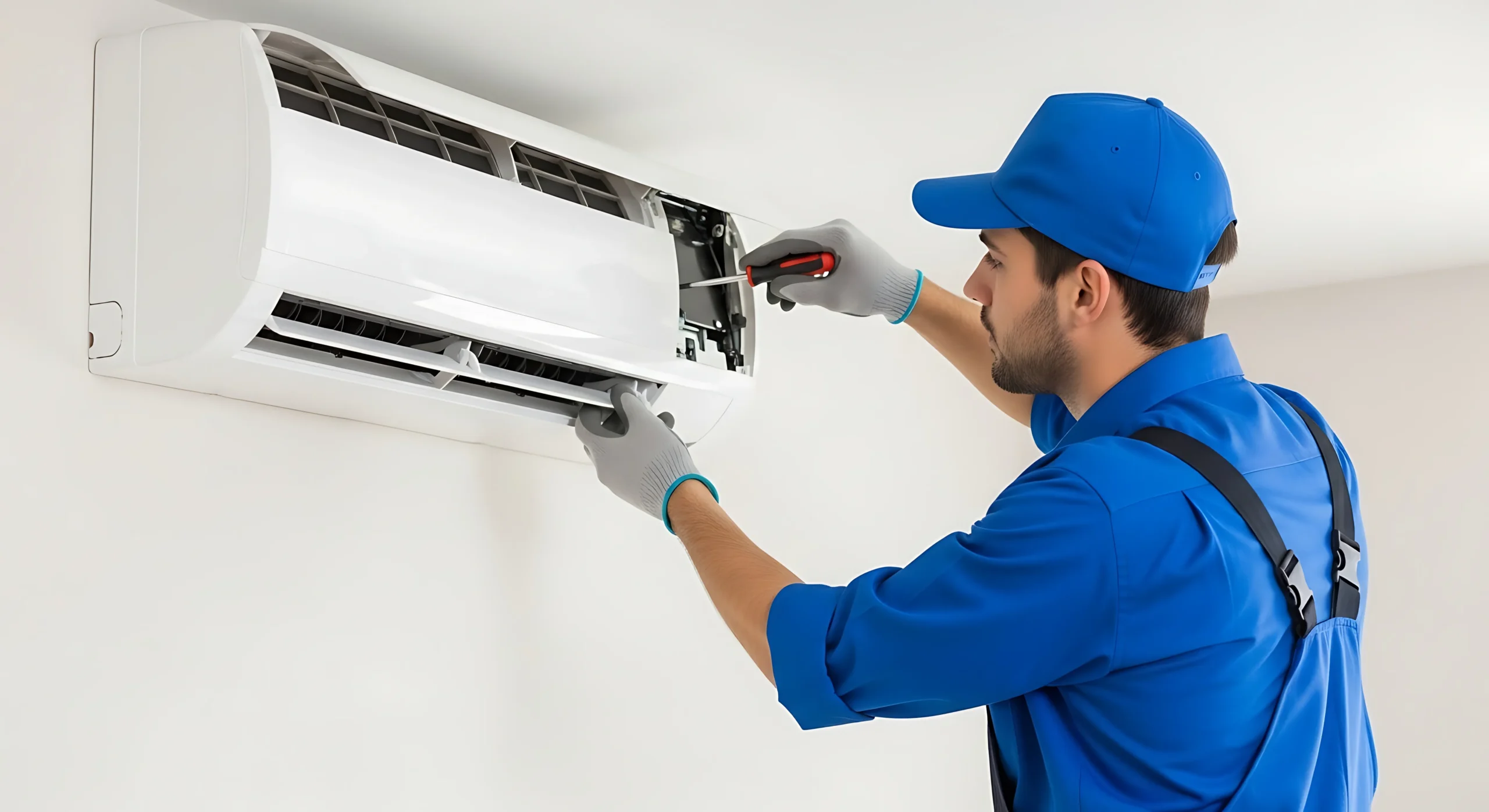
Technician Changing White Wall Mounted Air Conditioner AC Filter in Modern Indoor Setting

Minnesota-Specific Best Practices

1. Ideal Replacement Frequency
Due to regional climate, MN homes should follow:
  • Every 30 days — homes with pets, allergies, forests nearby

  • Every 60 days — standard suburban households (Woodbury, Oakdale, Cottage Grove)

  • Every 90 days — new construction with sealed duct systems

The DOE also confirms that dirty filters can drive up energy usage by 5–15%, so replacing on schedule directly affects utility bills.
2. Choose the Right MERV Rating (Scientifically Validated)
  • MERV 8–11 — general household use; traps common MN particulates

  • MERV 11–13 — ideal for allergies, asthma, wildfire smoke

MN Pollution Control Agency recommends higher filtration during smoke events.
3. Don’t Buy Ultra-MERV Filters Unless Your System Supports Them
MERV 14–16 filters can strain older HVAC blowers common in towns like Bayport, Lakeland, or Mahtomedi unless the system was designed for high static pressure.
4. Label Your Calendar by Minnesota Seasons
A practical schedule:
  • March — pre-pollen swap

  • June — mid-pollen / start of AC season

  • August — wildfire smoke defense

  • October — pre-furnace season

Smart, simple, seasonal.

When a New Filter Doesn’t Fix the Issue

If your AC still shows symptoms after replacing the filter, you may be facing:
  • Clogged evaporator coil — dust bypass or filter neglect

  • Failing blower motor — weak airflow even with clean filter

  • Duct leaks — common in older Minnesota homes

  • Low refrigerant — system can’t cool efficiently

  • Dirty return vents — restricting system intake

These are professional-level issues—not DIY territory. For Cooling services needs, visit our Cooling Services page and book your service with Norse Home Solutions team.

Why Minnesota Homeowners Choose Norse Home Solutions

Homeowners across Woodbury, Hugo, Afton, Scandia, Mahtomedi, Forest Lake, Cottage Grove, Oakdale, Dellwood, Lakeland, Lake Elmo, Stillwater, Marine on St. Croix, and all of Washington County rely on us because:
  • We understand Minnesota’s climate patterns better than national contractors.

  • We offer whole-home comfort checks, not just quick fixes.

  • We provide transparent, education-first service.

  • We’re locally owned — meaning your comfort is our community reputation.

Whether you’re dealing with weak airflow, uneven cooling, or just want to make sure your Minnesota AC system is ready for the season, Norse Home Solutions is here to help.

We’ll replace your filter, check your entire system, and make sure your home is summer-ready—without upsells or guesswork.

Book your AC service today and give your home the clean-air comfort it deserves.
For dependable performance across Woodbury and every surrounding Minnesota city, partner with Norse Mechanical. Our commercial HVAC, plumbing, and drain specialists deliver proactive maintenance, precision repairs, and system upgrades that keep your facility operating smoothly year-round—whether you manage offices, retail spaces, multi-tenant buildings, or industrial properties.
Minnesota winter home checklist – sealing door weather-stripping
HVAC

Winter Home Checklist for Minnesota: 7 Fixes Before First Freeze

Minnesota winter home checklist for homeowners: here are 7 things to do before the first freeze—always. When hard freezes hit around Minneapolis–Saint Paul, small oversights can turn into big bills—burst pipes, dead furnaces, and flooded basements. Use this seven-step plan to winter-proof your home before temperatures plunge. Save time, money, and stress with simple, proven

Read More »
HVAC myths - contractor measuring static pressure during maintenance | Heat pumps
HVAC

HVAC Myths That Always Cost You: 7 Mistakes to Avoid

Some HVAC myths refuse to die—and they always cost homeowners in higher bills, uneven comfort, and premature breakdowns. Use this guide to separate fact from fiction and make smart, money-saving choices for your system.   Myth #1: “Closing vents in unused rooms saves money.” Why it sticks: It sounds logical—don’t cool/heat rooms you don’t use.

Read More »
HVAC sounds - technician inspecting blower motor, Heat pump repair and maintenance under Minnesota heating services
HVAC

HVAC Sounds You Should Never Ignore: 5 Noises & Fixes

When a system is healthy, HVAC sounds fade into the background. New or louder noises are your early-warning system. Below, we explain the why, what to check, and your options (DIY vs. pro) for five common noises—so you always make a safe, cost-smart call.   HVAC sounds triage framework (before you start) Safety first: If

Read More »